

Biostimulants: what they are and what results can they help achieve?
Behind truly innovative and effective products lies extensive research, experimentation, and agronomic refinement.

But what exactly are they, and how do they work?
On 25 June 2019, the new EC Regulation 2019/1009 was published, which includes the category of biostimulants and establishes the rules governing their commercialization in Europe. Specifically, it states that:
A plant biostimulant is a fertilizing product whose function is to stimulate plant nutritional processes independently of the product’s nutrient content, with the sole aim of improving one or more of the following characteristics of the plant or its rhizosphere:
- Nutrient use efficiency;
- Tolerance to abiotic stress;
- Quality characteristics;
- Availability of nutrients in the soil or rhizosphere.

Biolchim actively participated in the dialogue with European institutions that accompanied the regulatory definition process. In fact, our brand is among the ten founding members of EBIC (European Biostimulants Industry Council), established in 2011 and now comprising numerous members among the leading manufacturing companies in the sector.
Since its foundation, EBIC has been actively involved in the European Commission’s work on revising the legislation and has carried out extensive outreach activities to raise market awareness of what biostimulants are and how they work.


Biostimulants help increase nutrient uptake by plants by acting on plant physiology and transport systems or by stimulating root system development, enabling plants to explore larger soil volumes.
Particularly innovative are biostimulants with probiotic and prebiotic action, which supply the soil with microbial consortia and targeted active ingredients that help modulate the rhizosphere microbiota. This makes it possible to promote the biological recovery of exhausted soils and improve root system efficiency.
An example is VHERA™ LIFE, a prebiotic biostimulant for roots and soil microbiome, developed to promote root capillarization and revitalize the rhizosphere, supporting crop development even under complex pedoclimatic conditions.

The use of biostimulants helps mitigate the negative effects of pedological and environmental stress factors such as extreme temperatures, salinity, and water scarcity, supporting higher production standards even under challenging growing conditions.
Their preventive use is also important, for example to mitigate the effects of cold spells or to implement irrigation management strategies aimed at resource savings.
HAMIN 8™ is one of the formulations designed to meet this need, as it supports plant development by promoting protein synthesis and optimizing energy consumption.

Biostimulants can help stimulate both primary and secondary plant metabolism, promoting the physiological processes underlying crop productivity, such as root and vegetative growth, flowering, fruit set, and fruit enlargement. They also help improve the organoleptic quality of the final product by enhancing fruit coloration, shelf life, and the accumulation of sugars and high value nutritional compounds (antioxidants, proteins, microelements, etc.).
Recognized as two well-established formulations on the market, FOLICIST® and KRISS® BIOLOGICO provide plants with specific physiological support during phases of intense cell multiplication.
- FOLICIST® stimulates sprouting, flowering, and fruit set, promoting yield regularity.
- KRISS® BIOLOGICO naturally promotes fruit growth, supporting the achievement of larger fruit size and improved quality.

Biostimulants are used to enhance nitrogen fixation, phosphorus assimilation, and the uptake of other micronutrients, as well as to improve soil structure and aeration, thereby increasing nutrient availability—particularly nitrogen and phosphorus—in the soil and rhizosphere.
Thanks to its composition, SIVEG® GR supports the gradual release of organic nitrogen which, combined with its beneficial effects on root activity and soil structure, promotes steady and balanced crop growth from planting to harvest.
Results may vary depending on crop type, environmental conditions, and application practices.
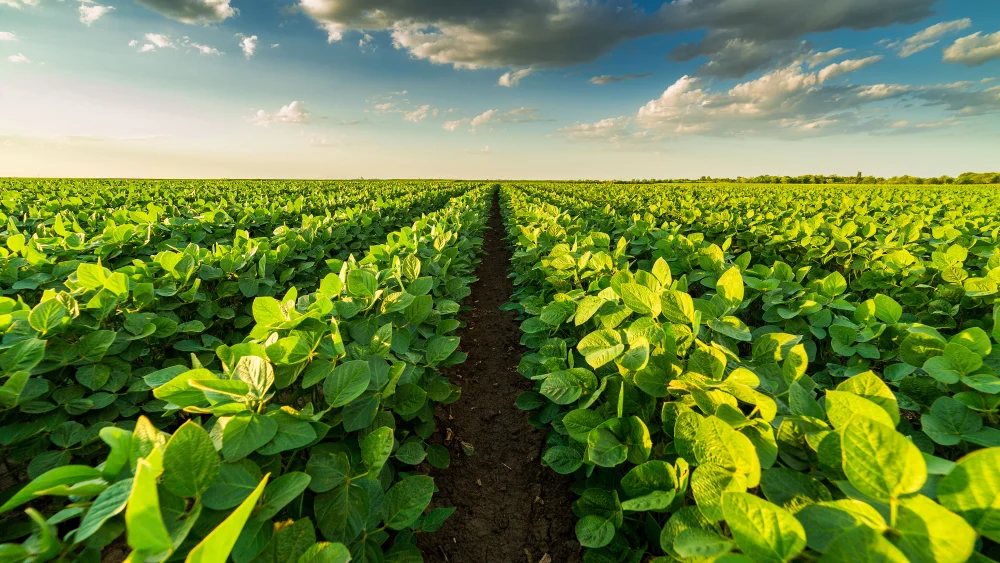
The result of continuous research activity and over 50 years of agronomic field experience, Biolchim biostimulants are developed to deliver targeted, scientifically sound responses to crop physiological needs.
Our approach is based on the awareness that the success of biostimulants depends on the combination of intrinsic factors—such as formulation quality and efficacy—and extrinsic factors, including correct application under different pedoclimatic and cropping conditions.
For this reason, Biolchim invests time and resources in consolidating what we consider the fundamental pillars of a serious and effective use of biostimulants in agriculture:
- INNOVATION AND RAW MATERIAL QUALITY
- LARGE-SCALE EXPERIMENTATION
- EXPERIENCE AND TECHNICAL SUPPORT

To formulate its biostimulants, Biolchim uses plant‑derived raw materials, carefully blended with natural adjuvants that enhance the efficiency of metabolic promoters within the plant.
In addition to protein hydrolysates, seaweeds, and proprietary plant extracts, Biolchim is constantly researching new raw materials and advanced formulation technologies to better optimize product performance and effectively respond to the evolving needs of the market.
Our raw materials undergo rigorous selection processes, including strict analytical controls and laboratory tests to verify quality, safety, and biological activity.
To ensure efficacy and safety, Biolchim tests its biostimulants in the field throughout their entire life cycle—from development to commercialization—across a wide range of crops and pedoclimatic conditions.
The extensive data collected through this large-scale experimentation program allows us to select only the best prototypes, position them correctly on the market, and recommend the most appropriate biostimulant solution for each specific context, to the benefit of end-user satisfaction.
Each year, Biolchim conducts numerous experimental and demonstration field trials with its biostimulants, in collaboration with testing centers, experimental stations, opinion leaders, and farms, giving stakeholders the opportunity to directly experience the potential of our products.

The correct use of biostimulants—and therefore their ultimate success—requires awareness of several key aspects. First of all, there is no single biostimulant suitable for all uses; product selection must always focus on the specific benefit to be achieved.
Moreover, application guidelines are not universal but must be calibrated according to pedoclimatic conditions, crop status, and existing fertilization and crop protection strategies.
To support farmers in choosing the most suitable biostimulant solution and integrating it effectively into farm management, Biolchim offers a high‑level technical assistance service, delivered by professionals with extensive field experience who are continuously updated on experimental results and the technical and market positioning of each product.